If you watched WWE between 2002 and 2005, you remember just how chaotic and unpredictable Monday Night RAW felt. The legendary Attitude Era had officially come to an end after the purchase of WCW and ECW, and WWE was entering a brand-new chapter. The first official brand split in 2002 separated RAW and SmackDown into two distinct rosters, creating internal competition. While SmackDown quickly found its identity as “The Wrestling Show,” RAW leaned heavily into drama, shock value, and unforgettable moments.
Under the leadership of Eric Bischoff as General Manager, RAW embraced controversy. Bischoff, formerly the president of WCW, brought his edgy, boundary-pushing style to Monday nights. Segments often blurred the line between sports entertainment and pure spectacle. Intergender confrontations became part of weekly programming, and yes—moments like a woman getting chokeslammed were presented as shocking television rather than rare occurrences.
One of the most dominant forces during that era was Kane. Unmasked in 2003 and reimagined as a more psychologically unstable monster, Kane delivered destruction without hesitation. His feuds often escalated into uncomfortable territory, including storylines involving Lita and others that pushed the envelope of what fans expected from WWE programming at the time. These moments were controversial, talked about endlessly, and undeniably part of RAW’s identity.
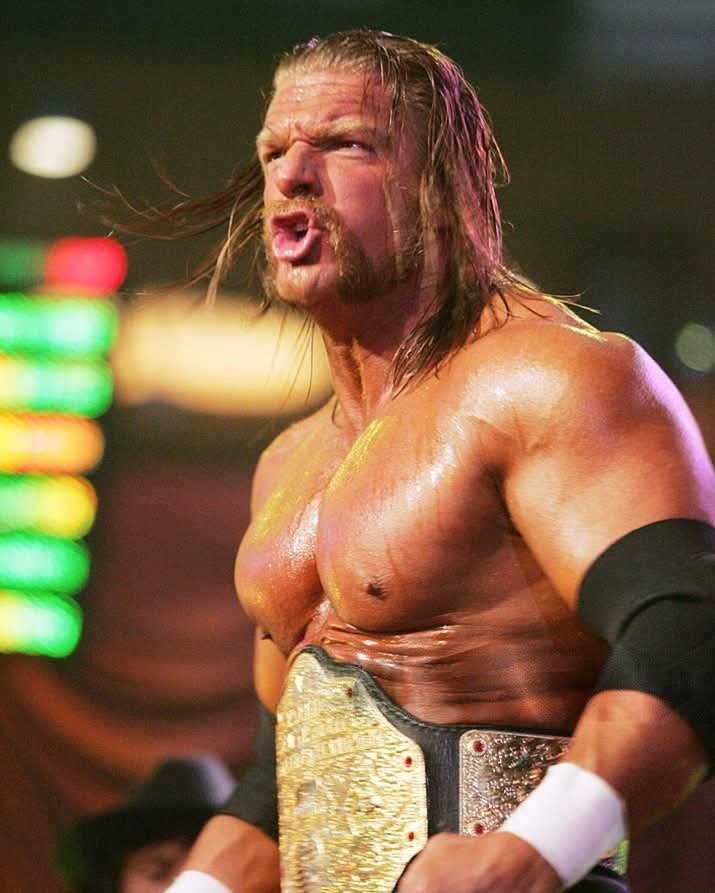
Meanwhile, RAW was stacked with main-event talent. Triple H dominated the World Heavyweight Championship scene, leading Evolution and cementing himself as “The Game.” Shawn Michaels delivered show-stealing performances, including his brutal rivalry with Triple H that blurred personal and professional lines. Goldberg brought his WCW aura to RAW in 2003, creating dream matches fans never thought they’d see under the WWE banner.
At the same time, SmackDown was building its own legacy with technical classics from stars like Kurt Angle and Eddie Guerrero. But RAW countered with spectacle, long promos, faction warfare, and controversial storytelling. It wasn’t just about five-star matches—it was about moments that made you gasp, argue, and tune in next week to see what would happen next.
Between 2002 and 2005, RAW was experimental, dramatic, and sometimes uncomfortable. It reflected WWE’s attempt to transition from the rebellious chaos of the late ’90s into something that could still shock audiences while establishing new stars. Love it or criticize it, that era of RAW was unforgettable—and for many fans, it defined their childhood Monday nights forever.
Posted inUncategorized
If you watched WWE between 2002 and 2005, you know that Monday Night RAW was getting a woman chokeslammed. The Attitude Era had just ended, its latest split had taken place, and SmackDown didn’t have a WWE evening. So what did Raw
Posted by
 By
No Comments
By
No Comments
By
No Comments