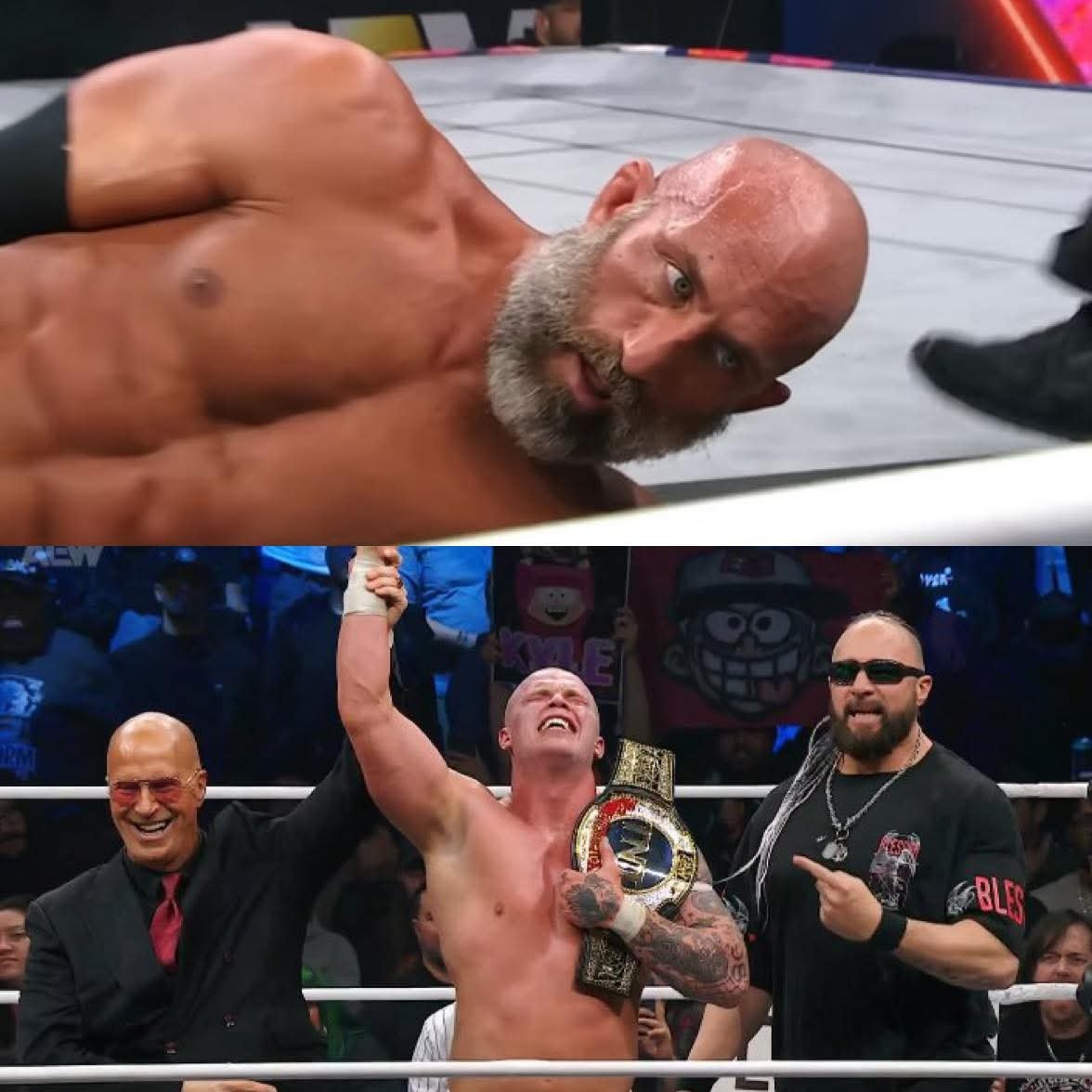
The wrestling world thrives on emotion — and sometimes, on pure frustration. Fans live every moment with their favorite stars, so when a character feels misused or out of place, reactions can get loud. That’s exactly the feeling behind the statement: “If I was Tommaso Ciampa, I would just walk out of AEW and ask WWE to sign me again… what is this!?”
It captures a common fan fear — seeing a gritty, hard-hitting wrestler lose the identity that made them special.
For years, Ciampa represented intensity. He wasn’t flashy. He wasn’t a superhero. He was believable. The “Blackheart” persona built its reputation on storytelling, slow-burn rivalries, and psychological brutality. His matches weren’t just contests — they felt personal. That’s why fans strongly associate him with the structured storytelling style often seen in WWE programming.
When fans imagine him outside that environment — especially in chaotic booking situations — it creates a disconnect. They don’t just see a wrestler performing differently; they feel like the character itself has been lost.
And that’s the real issue here.
Modern wrestling audiences don’t just follow promotions — they follow identity reminders. Some wrestlers fit certain creative systems better than others. A brawler who thrives on emotional feuds may feel misplaced in a fast-paced showcase format. Meanwhile, a high-flyer might feel limited in a slower storytelling structure. Neither is wrong — it’s about compatibility.
Many supporters believe Ciampa works best under the creative philosophy associated with Triple H — long arcs, personal rivalries, and character-driven narratives. That environment allowed him to evolve from villain to anti-hero without losing credibility. Fans remember how audiences reacted not because of moves, but because they cared about why he fought.
The idea of him asking to return isn’t really about contracts. It’s symbolic.
Fans are saying: Put him where his character makes sense.
Meanwhile, All Elite Wrestling is built on freedom, variety, and match quality. That system works perfectly for some wrestlers — just not necessarily for every personality archetype. A methodical psychological fighter can sometimes feel drowned in constant spectacle.
So the dramatic reaction — “what is this!?” — isn’t anger at wrestling.
It’s attachment to character consistency.
At the end of the day, wrestling works best when performer and presentation align. When they don’t, fans feel it immediately. And in a business built on emotional investment, nothing sparks louder reactions than seeing a favorite star somewhere that just doesn’t feel like home.
Posted inUncategorized
If I was Tommaso Ciampa, I would just walk out of AEW and ask WWE to sign me again. No, no because what is this!?
Posted by
 By
No Comments
By
No Comments
By
No Comments