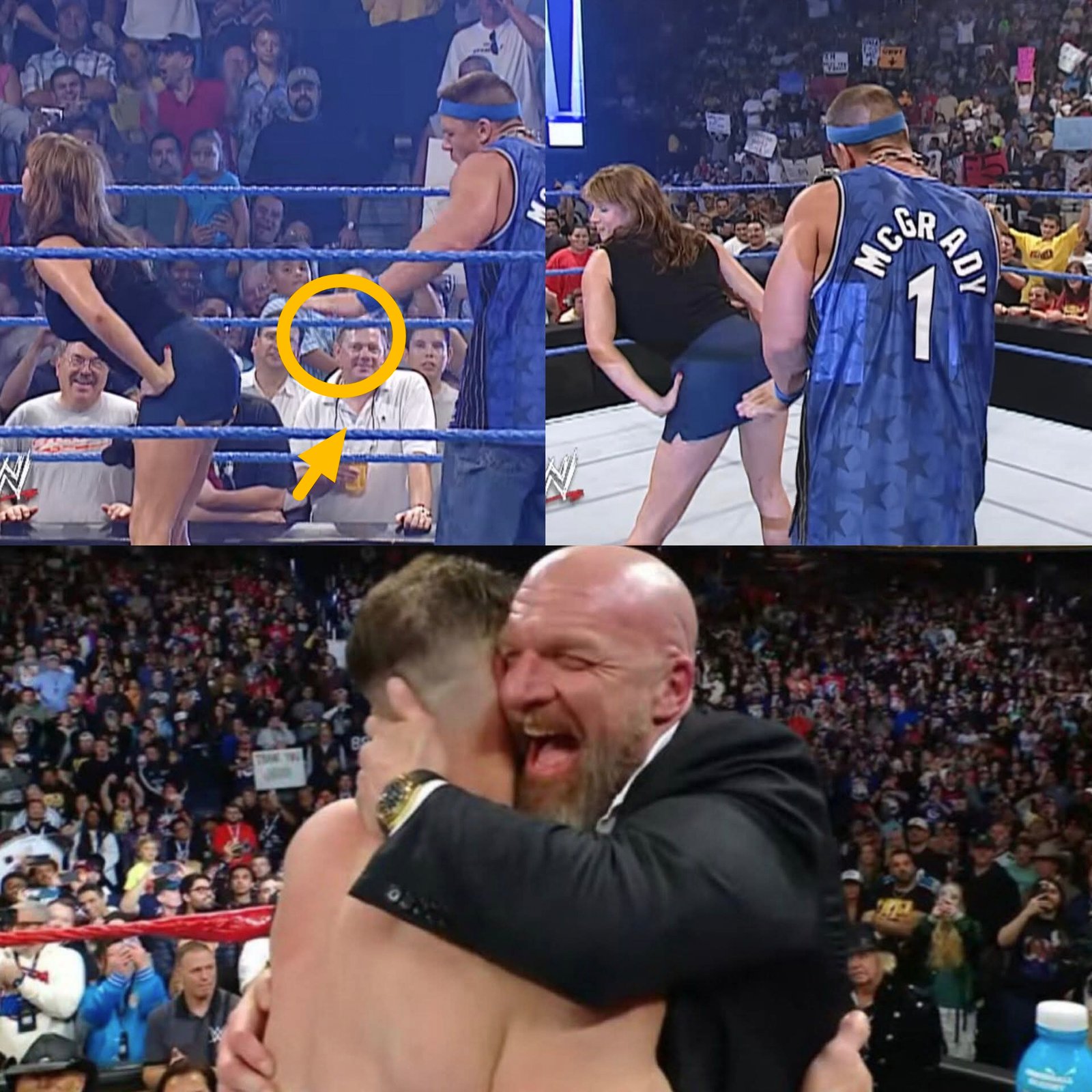
Triple H cashing in on the moment felt heavy, and for many fans, it landed like a quiet heartbreak 😔
What should have been a sacred, emotional chapter in wrestling history suddenly carried the weight of strategy and business. Wrestling has always lived in the space between reality and performance, but there are moments when fans hope the curtain stays closed — when emotion is allowed to breathe without direction, without an agenda. This felt like one of those moments. Instead of letting the feeling exist on its own, it became part of a larger machine, and that shift was impossible to ignore.
Triple H has always been a master of the game. As a performer, he understood timing, psychology, and control better than almost anyone. As an executive, those same instincts remain sharp. From a business perspective, capitalizing on a moment makes sense. Emotional peaks draw attention, headlines, engagement, and momentum. In today’s wrestling landscape, nothing is left unused. Every reaction is measured, every response analyzed. Still, knowing why it happened doesn’t make it hurt any less.
Fans weren’t asking for spectacle. They weren’t looking for storyline seeds or future leverage. They wanted authenticity — a rare pause where wrestling simply says “thank you” and steps back. When those moments are repurposed, it creates a disconnect. The emotion is still real, but it feels guided, shaped, and redirected. What could have been timeless instead becomes transactional, and that’s where the sadness creeps in.
There’s also a deeper frustration tied to trust. Wrestling fans invest emotionally for years, sometimes decades. They grow up with these performers, follow their journeys, celebrate their triumphs, and mourn their losses. When a moment like this arises, fans hope that investment is respected. Cashing in on it, even subtly, can feel like that trust is being tested — as if the fans’ feelings are just another asset to be managed.
That doesn’t mean Triple H is heartless or calculating in a cruel way. On the contrary, few people understand wrestling’s emotional power better than he does. That might actually be part of the problem. When you understand something so deeply, you also know exactly how to use it. Sometimes restraint is harder than action, especially when you’re wired to think long-term, to always move the board forward.
What makes it sting is the contrast. Triple H often speaks about honoring the past, respecting legacies, and preserving wrestling’s soul. In many ways, he has done exactly that. He’s elevated talent, restored credibility, and brought passion back into the product. That’s why moments like this feel so conflicting. Fans aren’t angry — they’re disappointed. And disappointment usually comes from high expectations, not hatred.
Wrestling is strongest when it knows when to stop. Not every moment needs a follow-up. Not every emotion needs direction. Sometimes the most powerful statement is silence, allowing the crowd to feel everything without interruption. Those moments linger longer than any angle or headline ever could.
In the end, Triple H “cashing in” isn’t unforgivable — it’s just human. Wrestling has always been a business built on emotion, and separating the two has never been easy. But fans will always hope that, once in a while, the business steps aside and lets the heart win. When that doesn’t happen, it leaves a quiet ache — not loud enough to cause outrage, but deep enough to be felt long after the lights go down.